Strengthening Micro Machining Performance
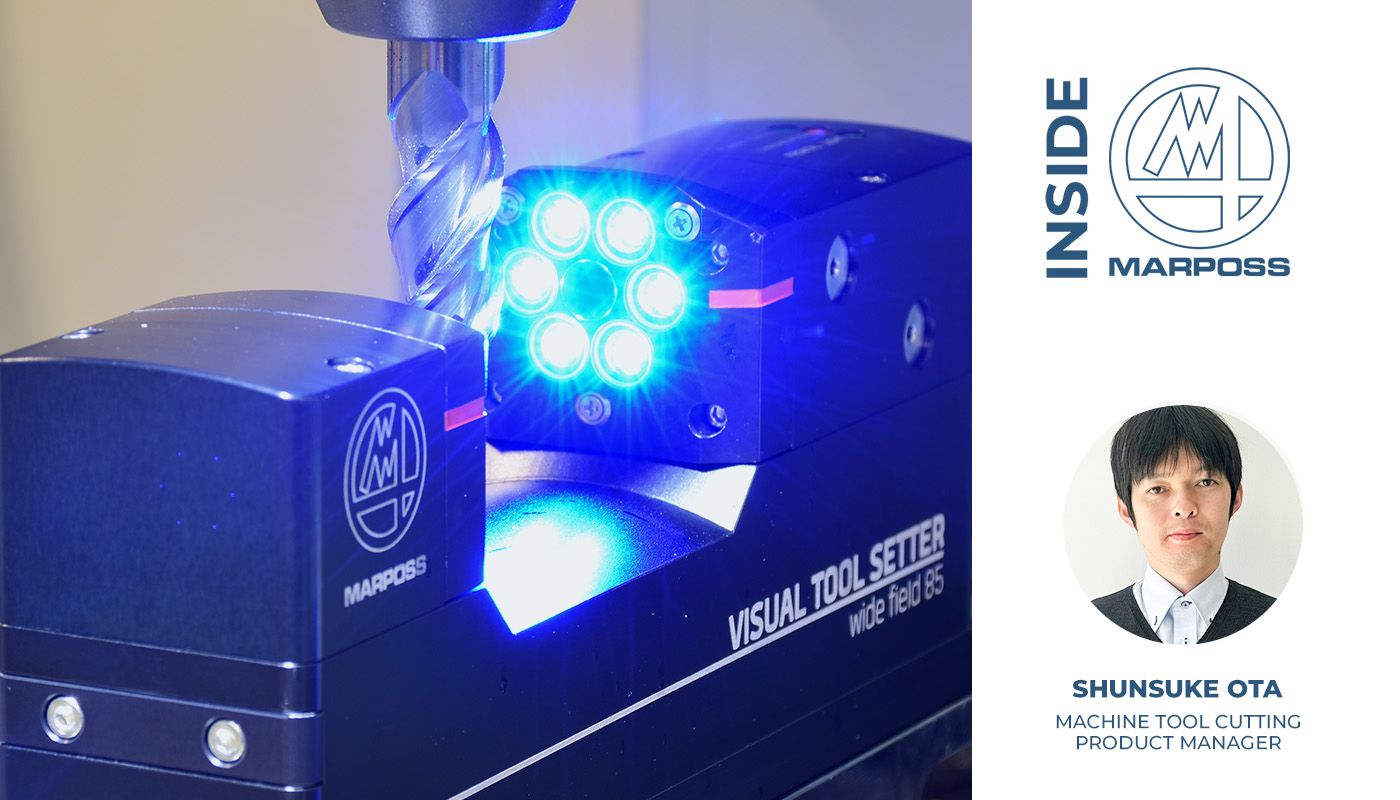
Practical Applications of the High-Precision In-Machine Tool Setter “VTS”
Practical Challenges in Micro Machining That Demand High-Precision Measurement
In micro machining and high-precision manufacturing environments, productivity and quality depend not only on improvements in machine tool performance but also on how consistently tool conditions can be monitored and controlled. When small-diameter tools are used, dimensional errors on the order of just a few microns can directly affect product quality. At the same time, it is extremely difficult for operators to intuitively detect tool wear or spindle growth during machining. In many cases, problems are not identified until machining has been completed. To achieve stable mass production and unattended operation, it is therefore essential to design processes based on in-machine tool measurement under conditions that closely reflect actual machining.
Why VTS Is Effective in Practical Manufacturing Operations
The Visual Tool Setter (VTS) is a non-contact tool setting system that uses CCD camera-based silhouette imaging and is designed for fully automated measurement via CNC macro programs. With conventional laser tool setters, detection variability tends to occur when measuring small-diameter tools or tools with special geometries. In contrast, VTS performs calculations using information from the entire imaging area, making measurement results far less sensitive to differences in tool diameter and shape. In addition, VTS supports measurement at spindle speeds of up to 80,000 rpm, enabling compensation values to be obtained under conditions very close to actual machining, including spindle thermal displacement and elongation. This capability represents a major advantage in practical micro machining applications.
Application Example 1: Reducing Setup Time and Stabilizing Machining Through Grinding Wheel Measurement
One practical application that takes full advantage of VTS’s silhouette-based measurement is in-machine grinding wheel measurement. With conventional contact-type tool setters, there is a risk of damaging the grinding wheel surface during rotation, while laser-based systems often suffer from unstable measurement results due to irregularities in abrasive grains. By capturing the entire grinding wheel within the camera’s field of view, VTS can stably detect the maximum outer diameter of the abrasive grains. By performing dressing after diameter measurement, dimensional control becomes significantly easier. Automating all of these processes within the machine reduces setup time and helps suppress dimensional variation during unattended operation, delivering tangible benefits in mold manufacturing and precision grinding processes.
Application Example 2: Tool Traceability and Wear Management
VTS is also used not only for tool geometry measurement but as a means of managing tool condition as quantitative data. In addition to contour measurement, surface wear analysis using controlled lighting conditions allows cutting-edge wear and shape changes to be recorded numerically. This enables the automation of tool replacement decisions that previously relied heavily on operator experience. By accumulating measurement data for each machining lot, VTS can also be used as traceability information that supports machining quality assurance. In component manufacturing for advanced industries with stringent quality requirements, this approach is attracting attention as an effective tool management method.
Conclusion: The Value of Integrating Tool Measurement Into Process Design
In the field of micro machining, competitiveness depends not only on improving machining accuracy but also on how effectively highly repeatable processes can be established. By automating high-precision tool measurement, VTS simultaneously addresses multiple practical challenges, including reduced setup time, support for unattended operation, and acquisition of quality assurance data. Treating tool measurement not as a supplementary task but as an integral part of process design is expected to be an effective means of achieving both stable production and improved product quality.